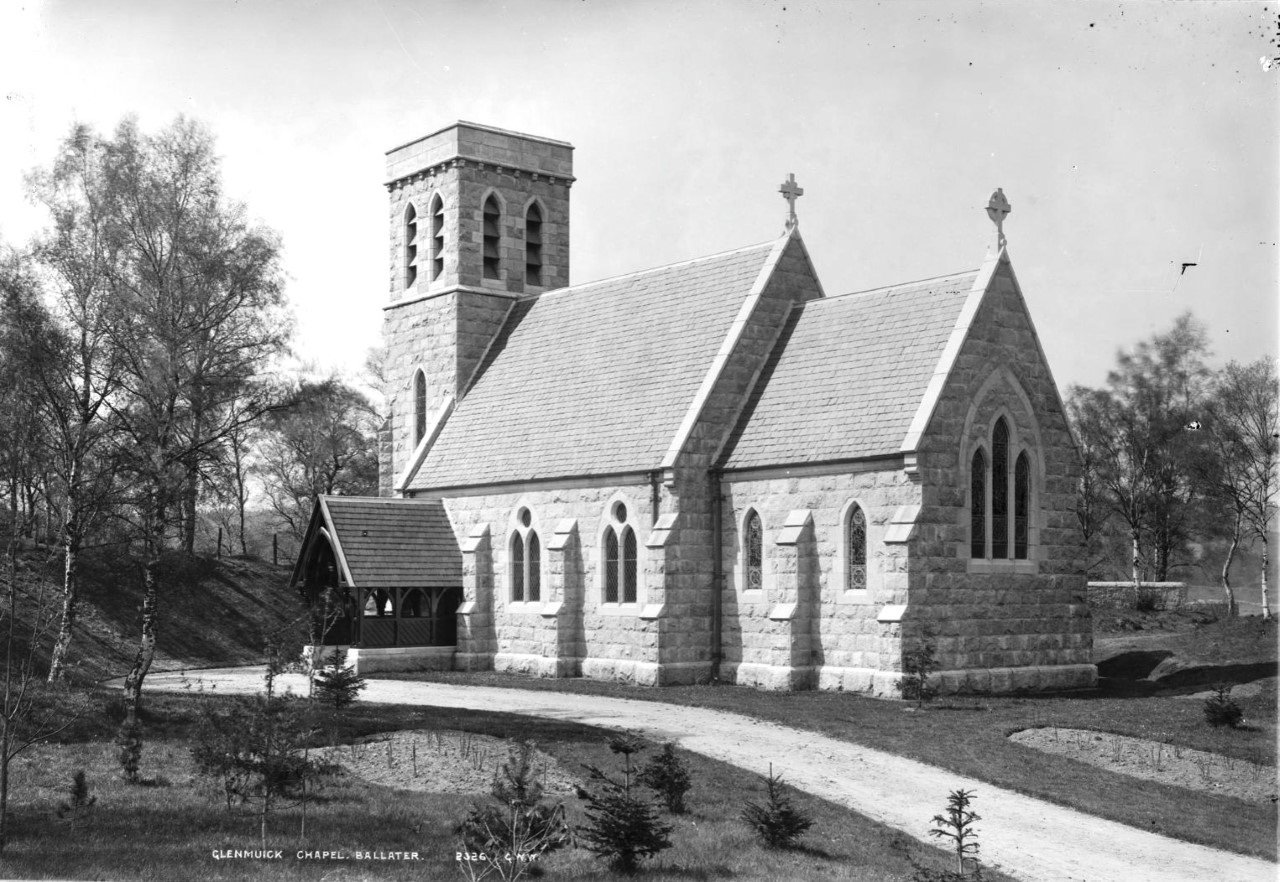
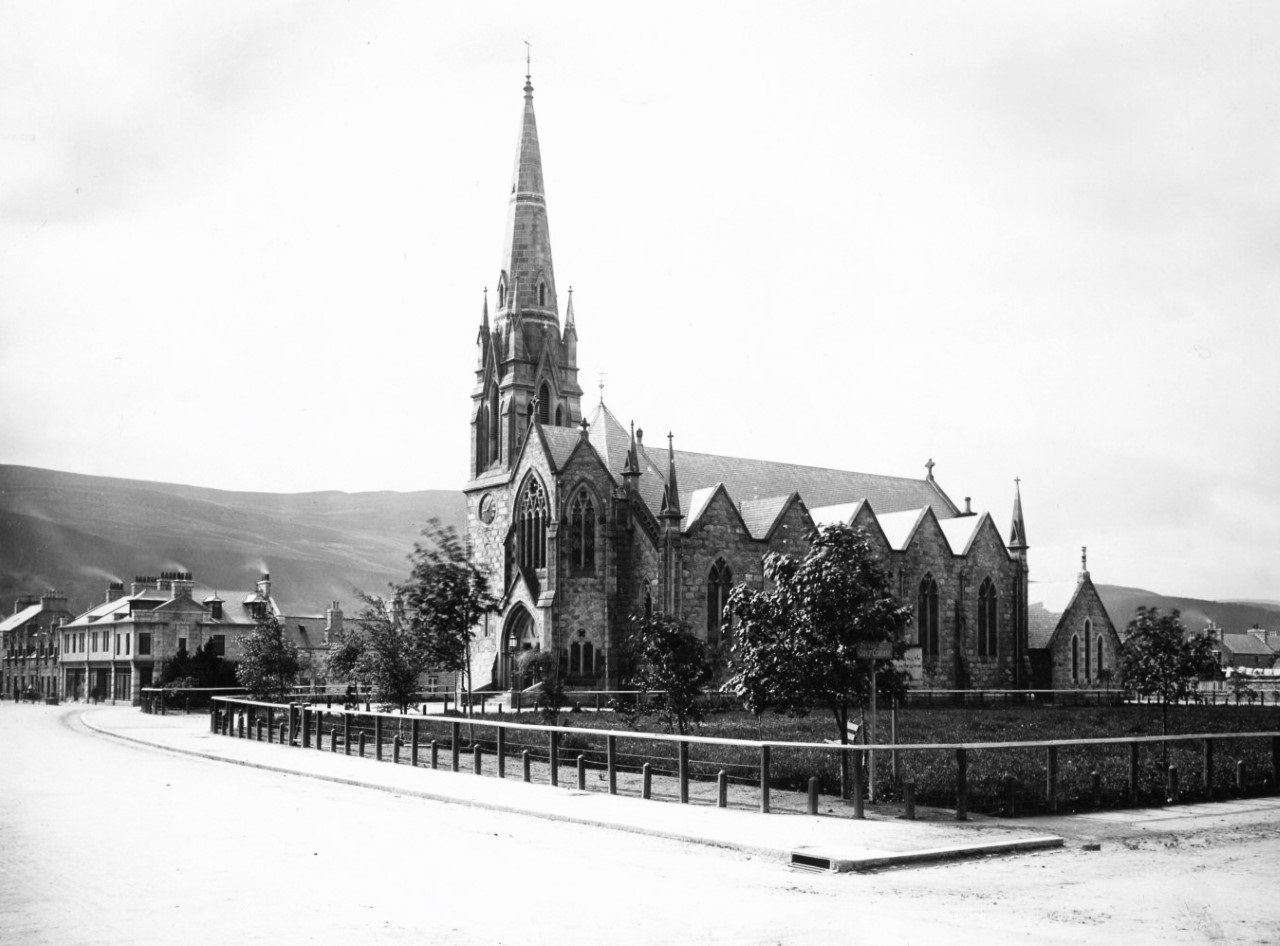
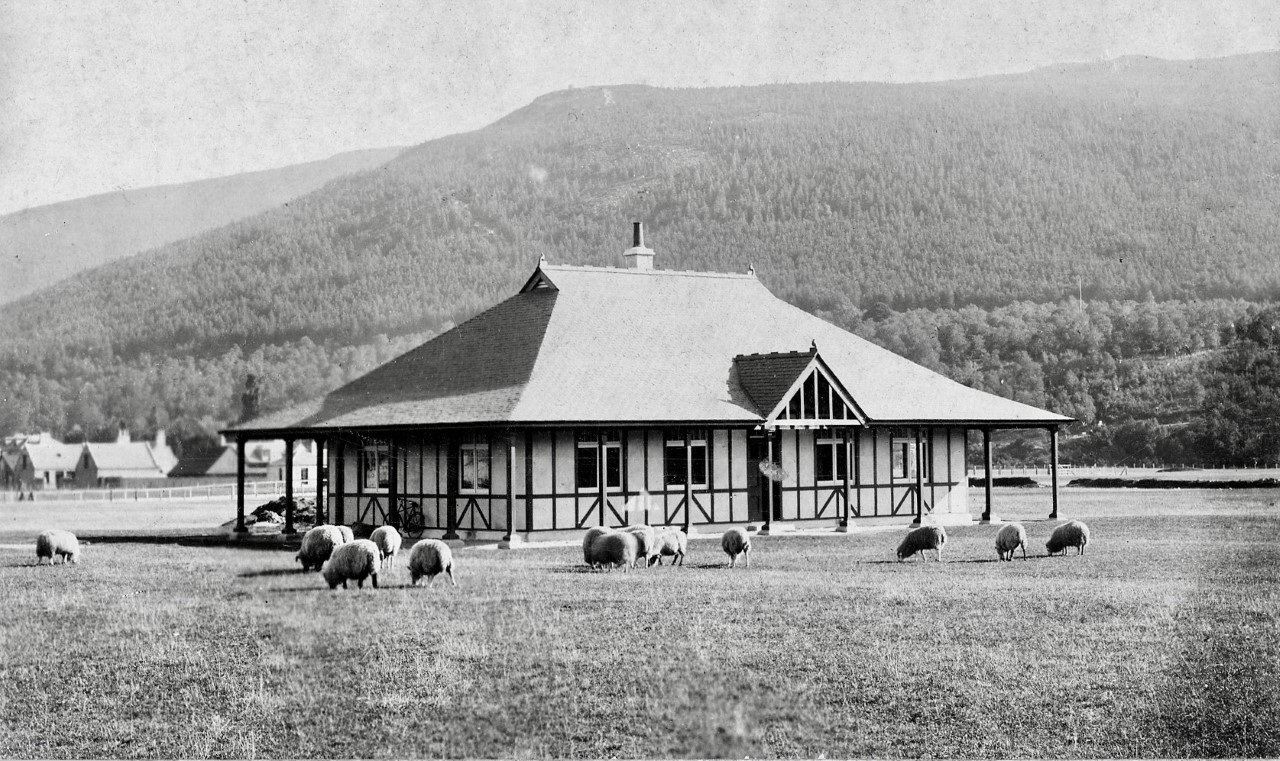
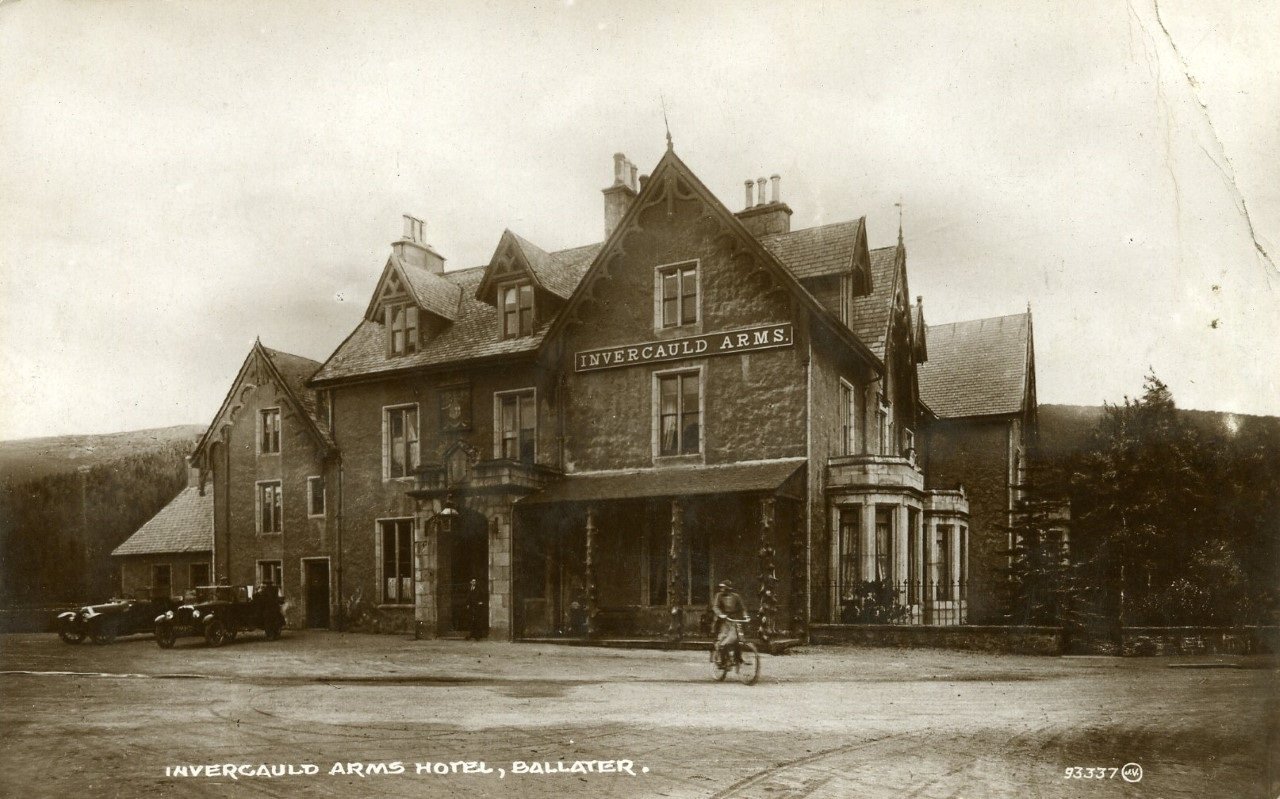
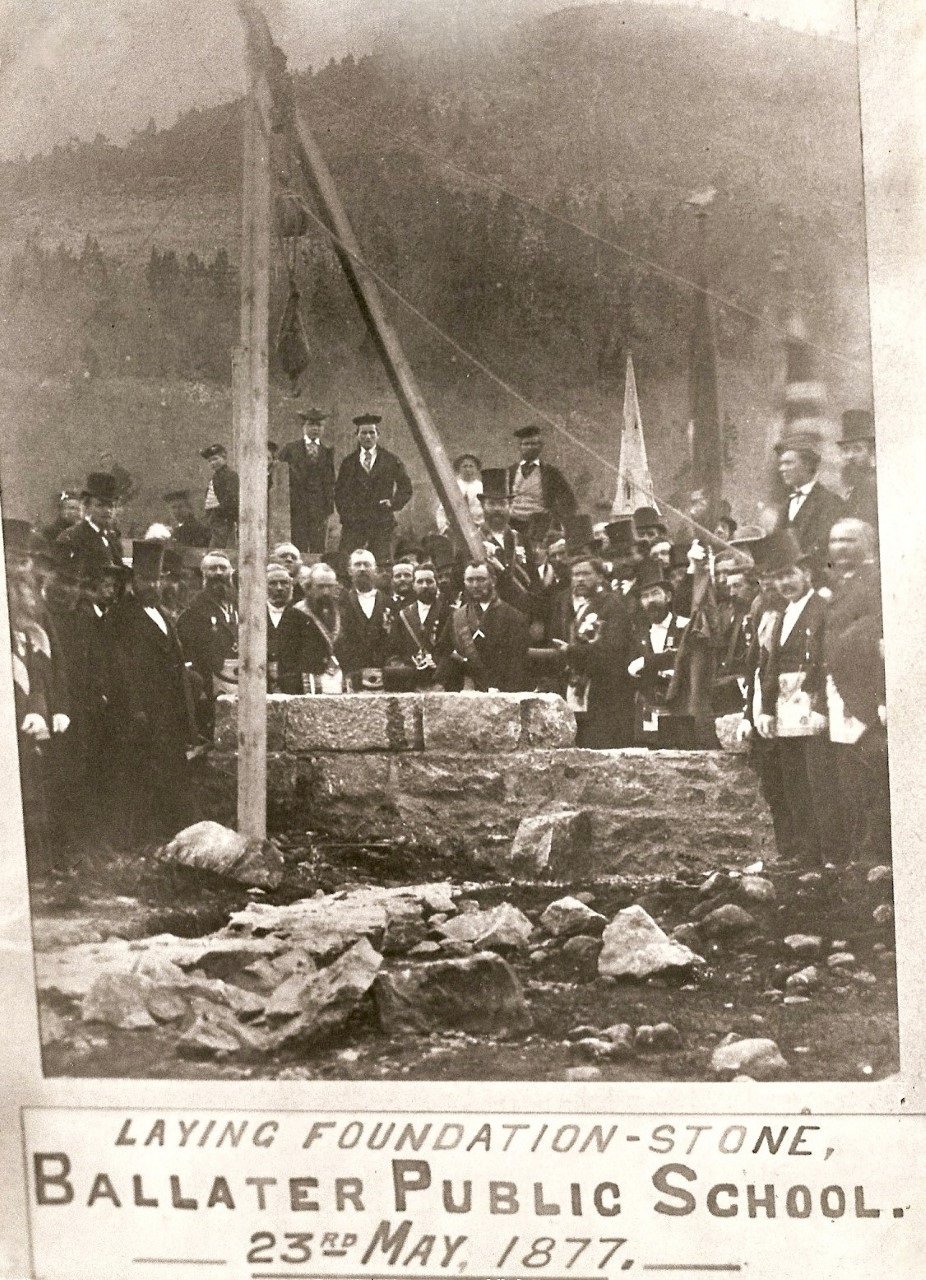
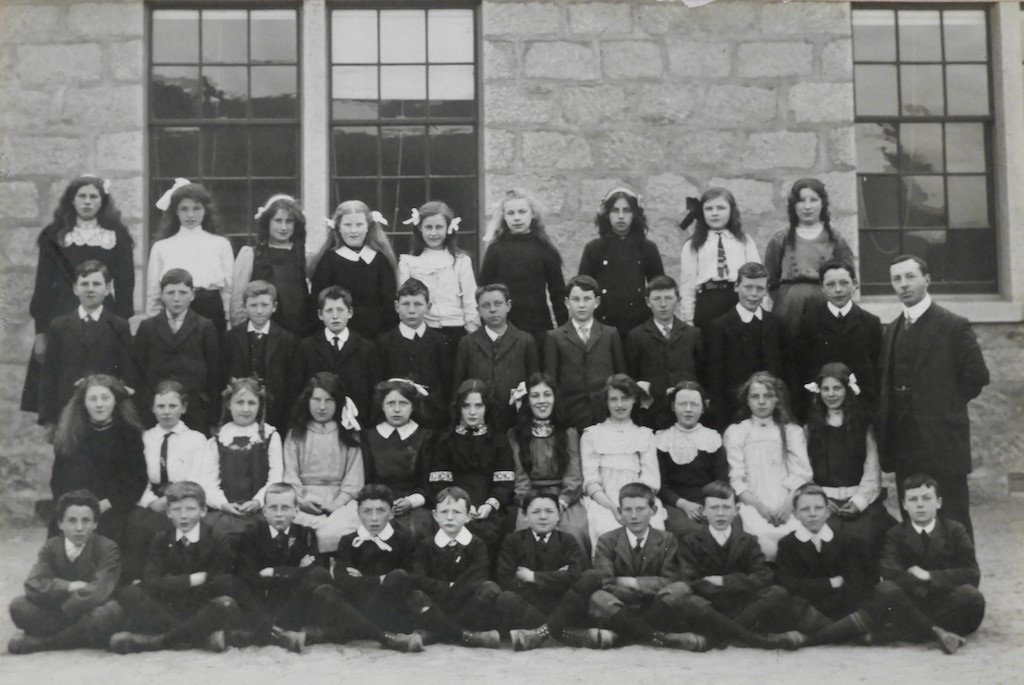
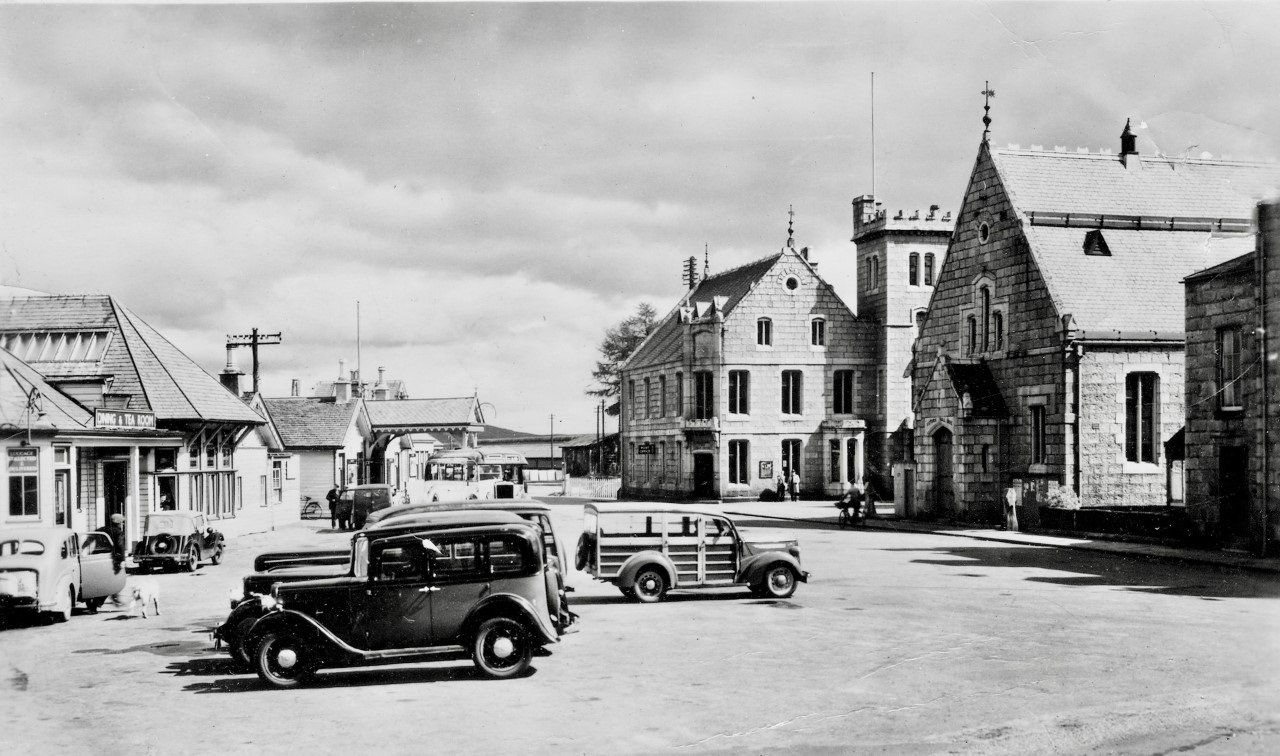
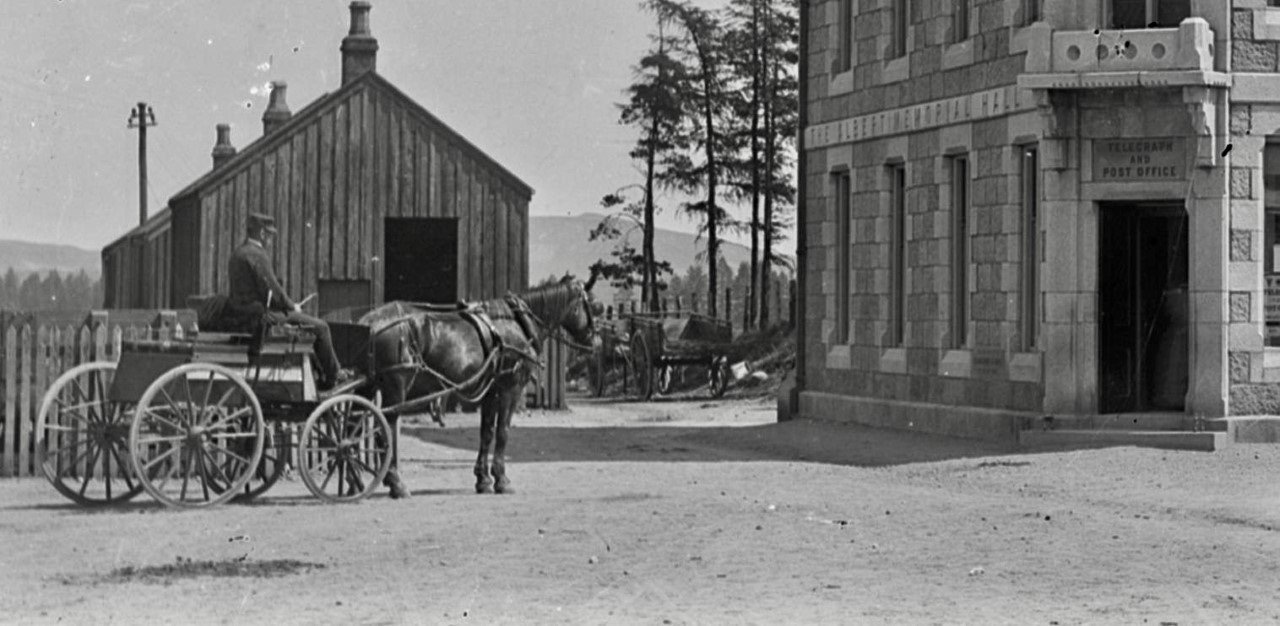
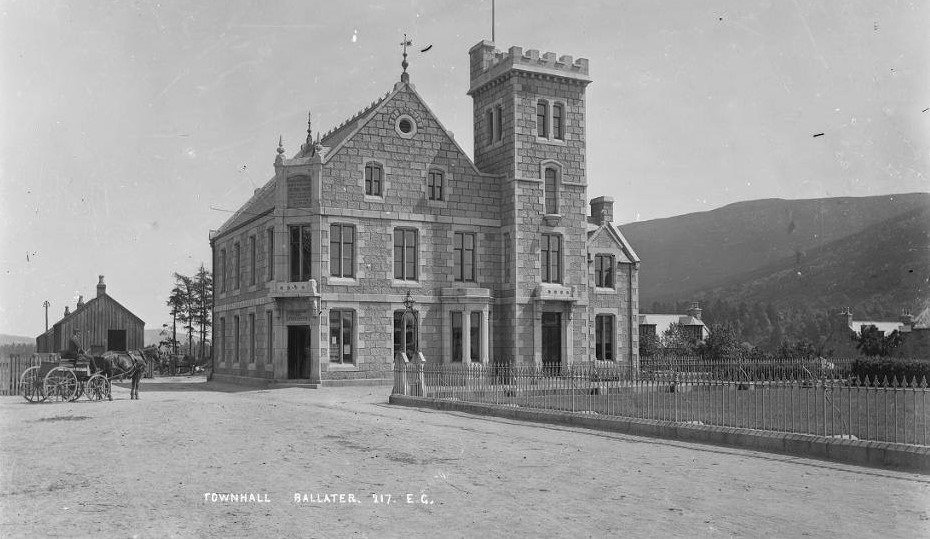
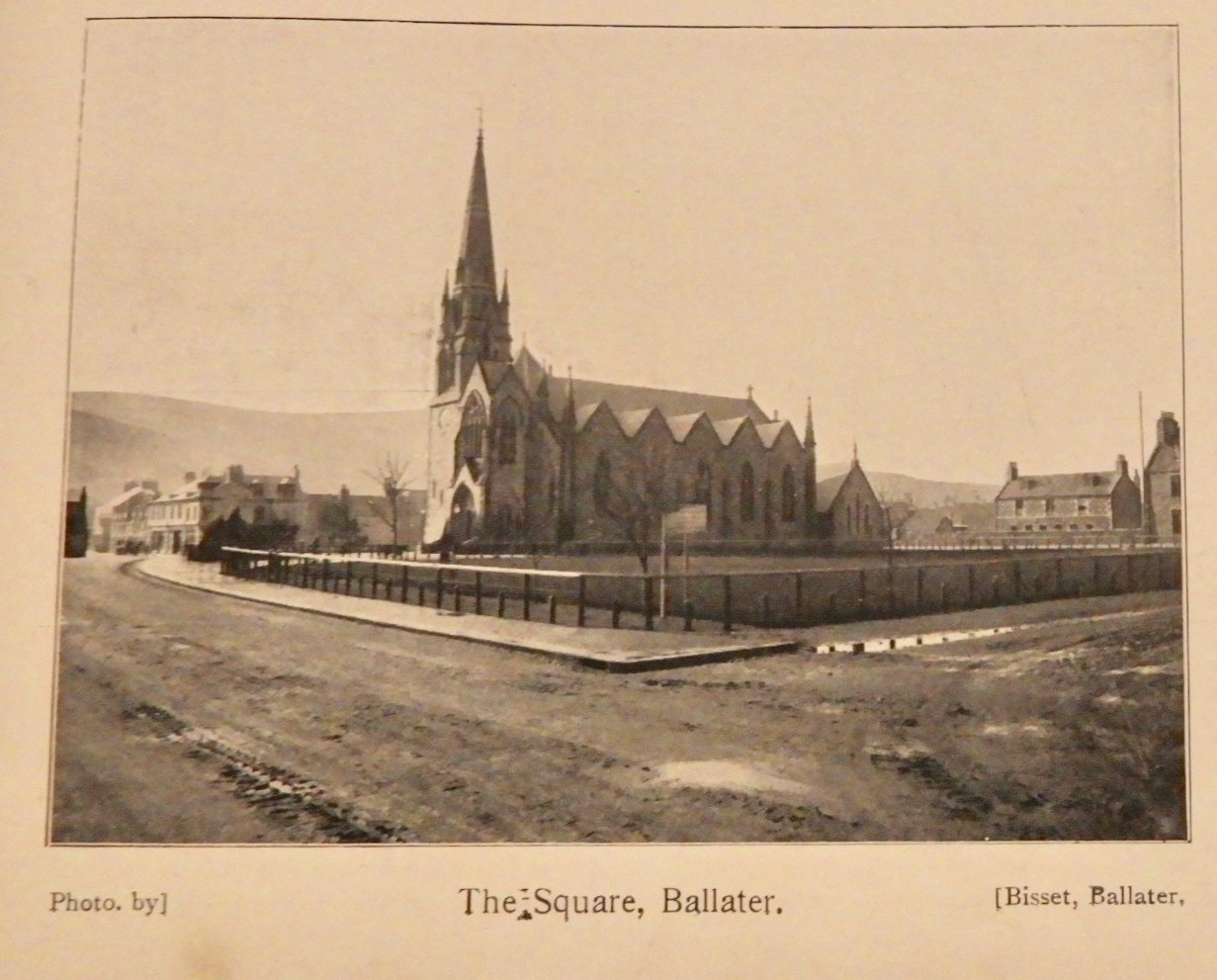
There have been many meanings and spellings of Ballater over the years, but the commonly accepted meaning is “Pass of the Water”. The name was taken from a group of houses at the east end of the Pass of Ballater. The old spelling was Bealadair – Bealach means “pass” and Dair means water.
The medieval pattern of development along this reach of the River Dee was influenced by the ancient trackways across the Grampian Mounth. This also determined the strategic locations of castles and other Deeside settlements of the Middle Ages. .[1]
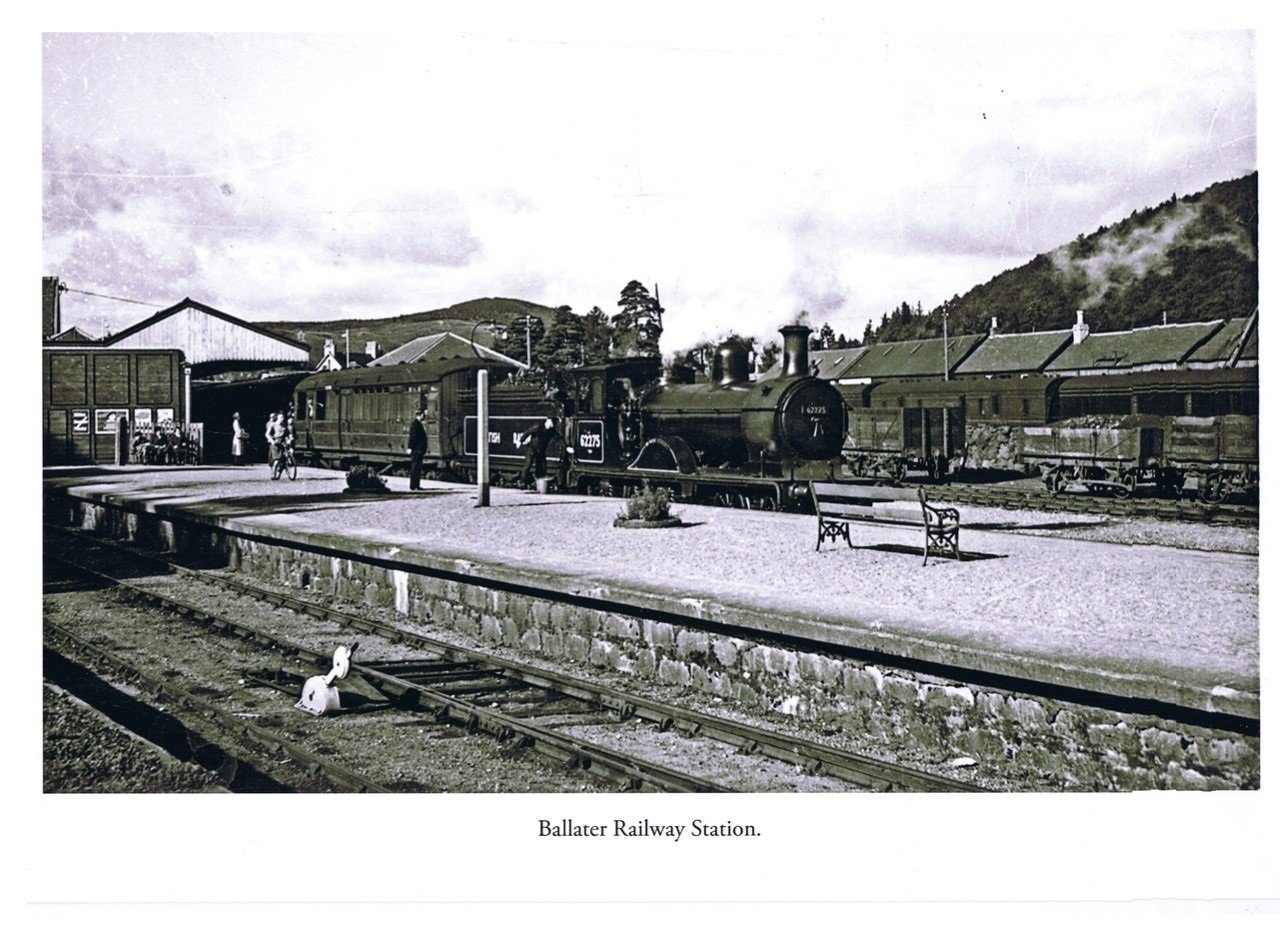
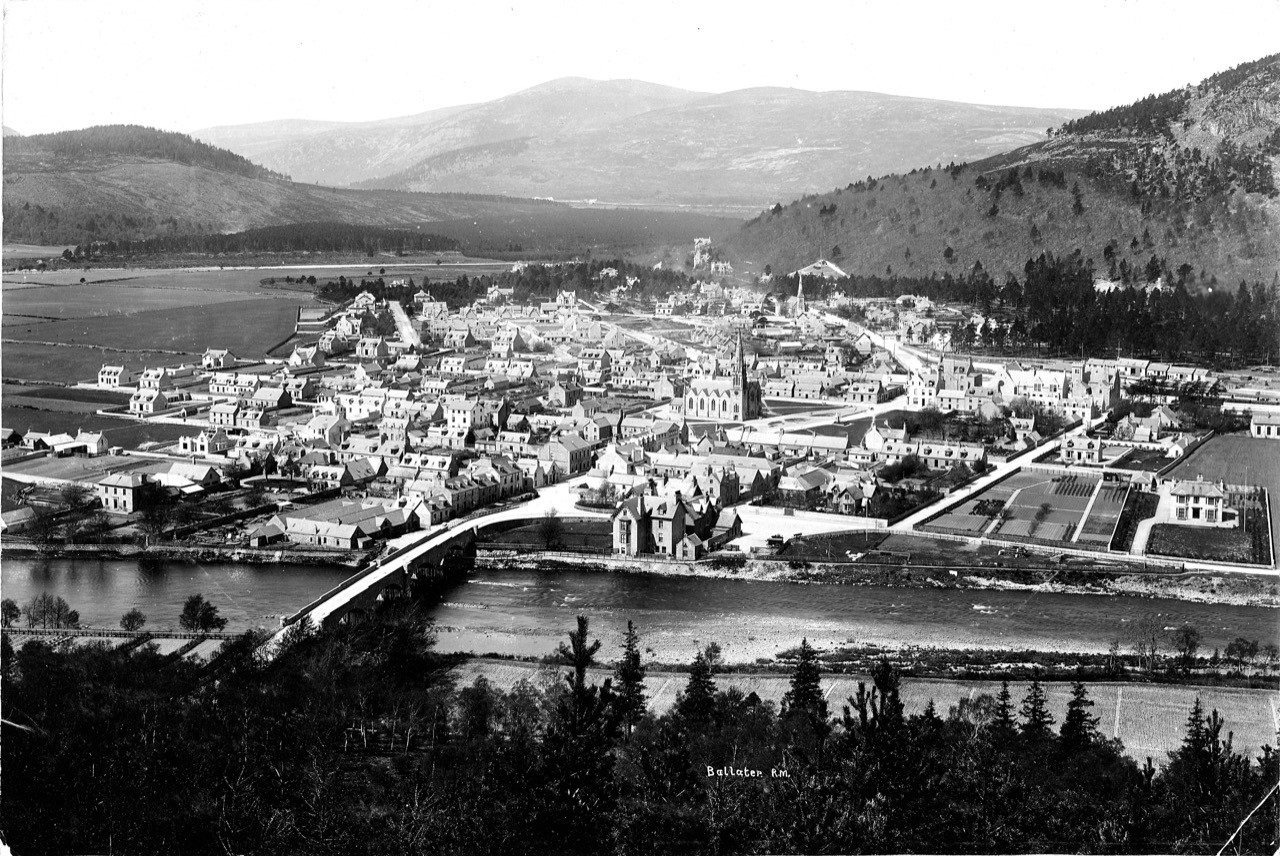
In the early 14th century, the area belonged to the Knights of St John, but the village only began developing around 1770 when Francis and William Farquharson established a spa resort at the Pannanich Mineral Well. The arrival of the railway in 1866 further boosted Ballater’s growth by improving access for visitors. The Victoria and Albert Halls were completed in 1895 across from the station.
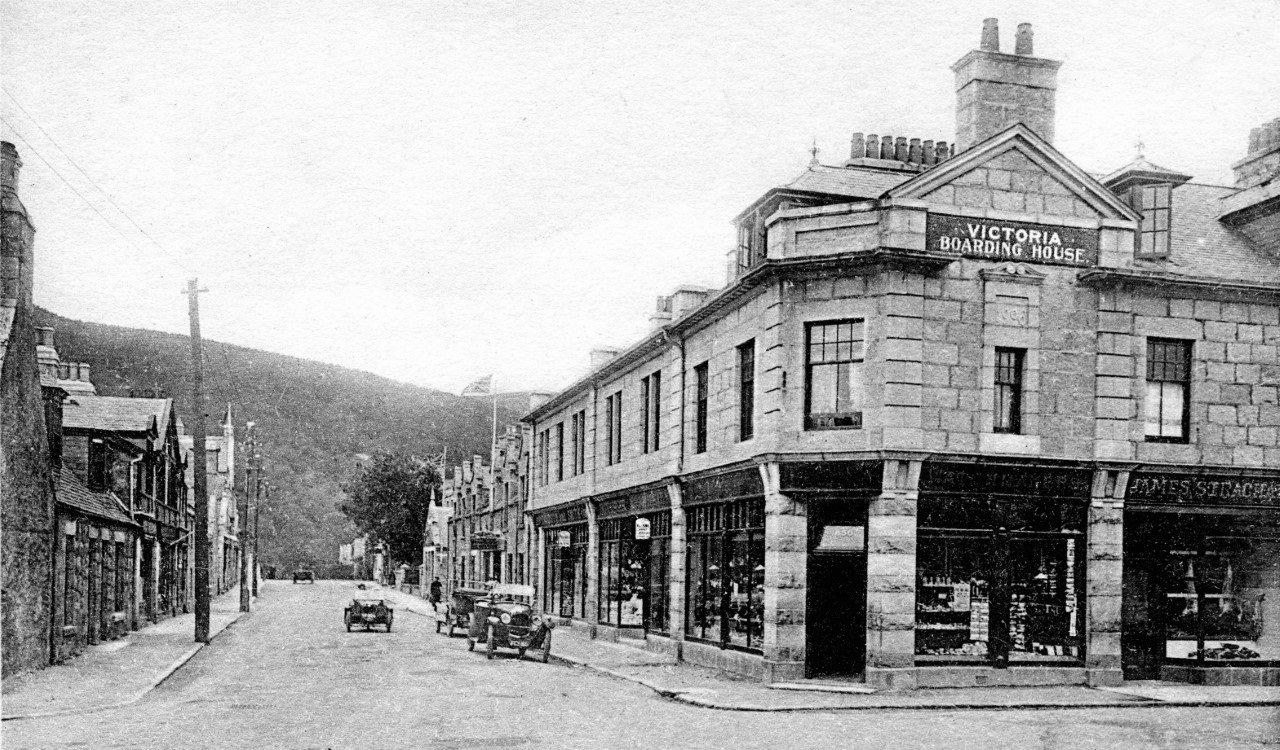
Ballater railway station, the former terminus of the Deeside Railway, was closed in 1966, but remains in use as a visitor centre with an exhibition recording the village’s royal connection. Many buildings date from the Victorian era and the centre of the village is a conservation area. The old visitor centre was substantially damaged by fire in May 2015 but has subsequently been restored and reopened.[3]
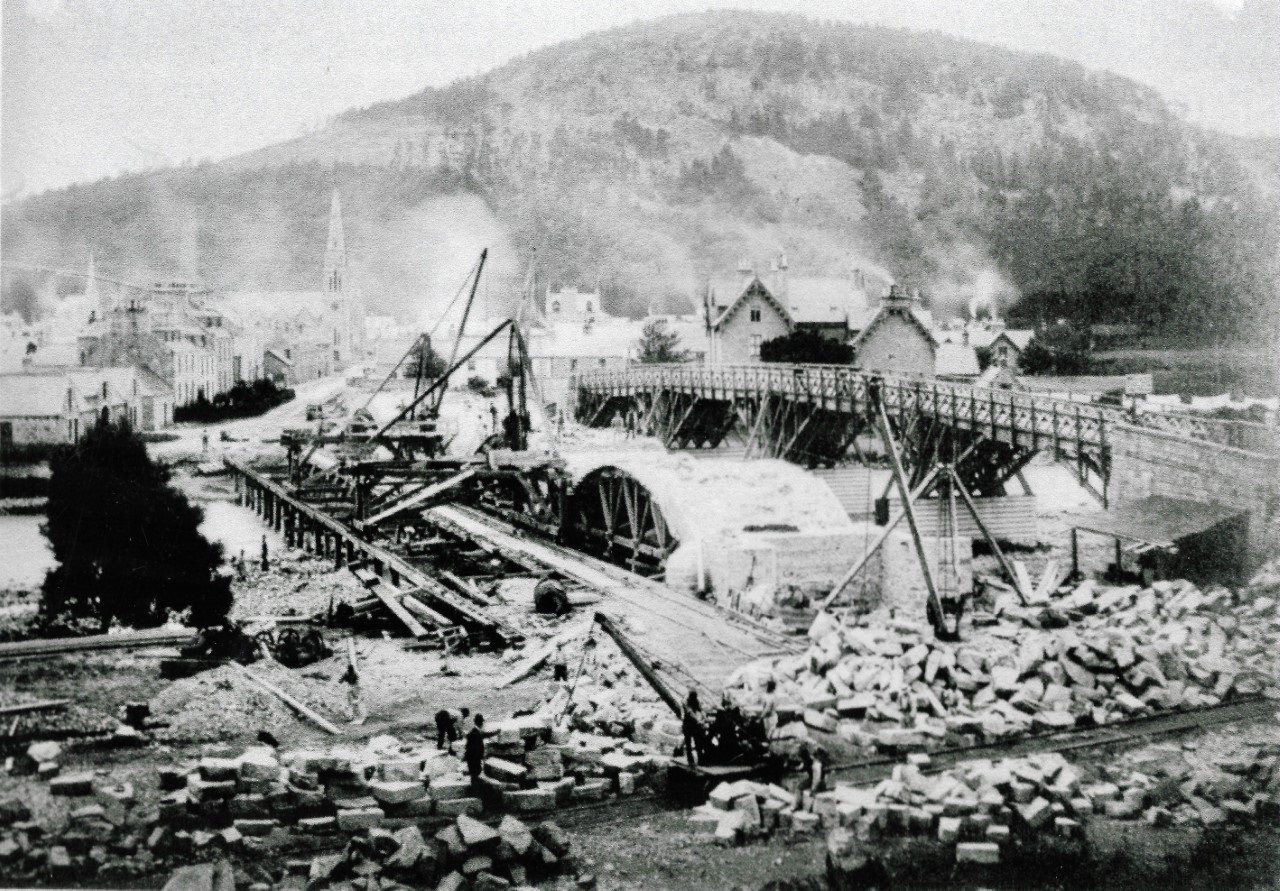
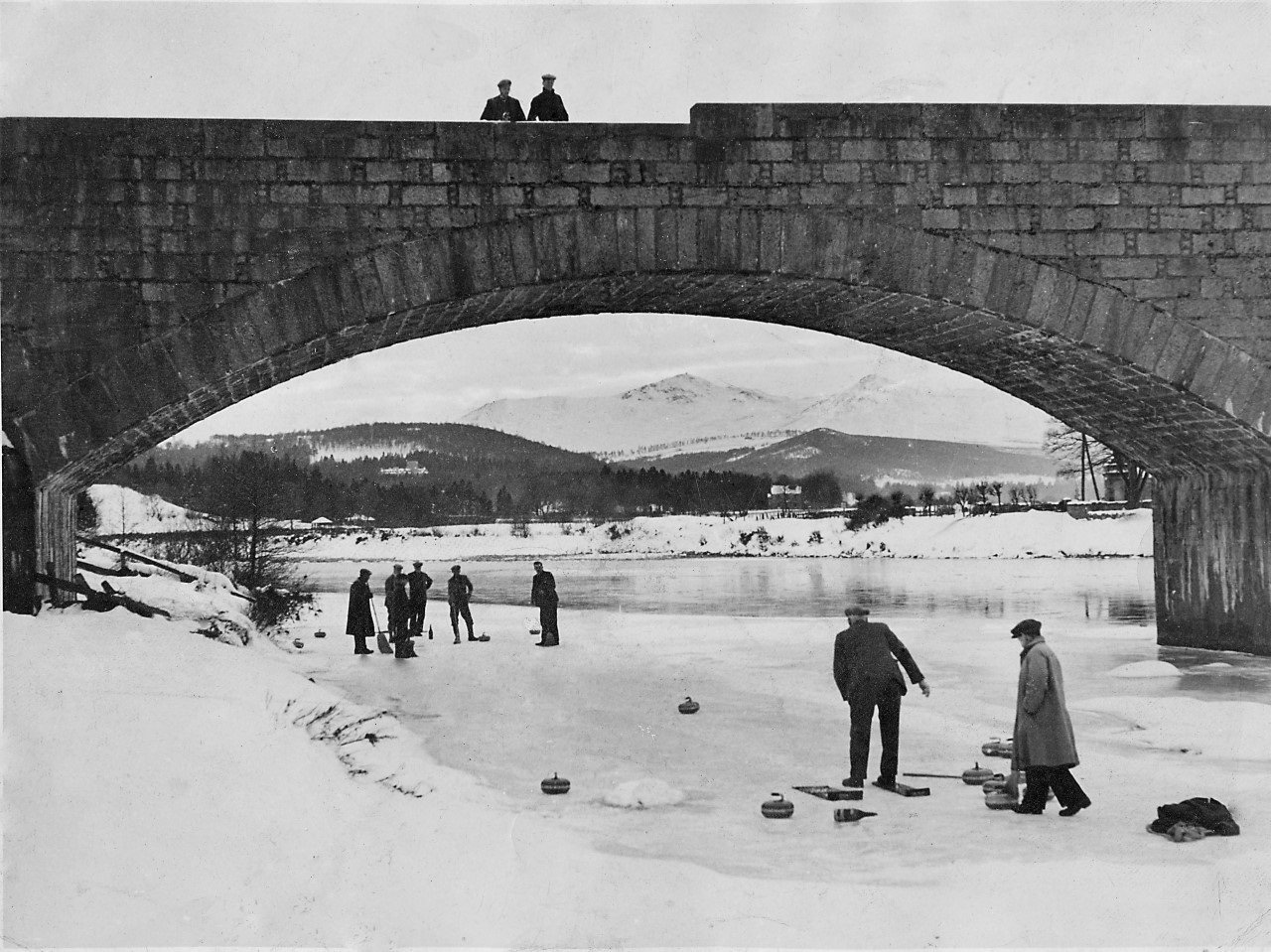
The first stone bridge over the Dee at Ballater was built in 1783 but lost to floods in 1789. Thomas Telford constructed a second stone bridge in 1809, which was swept away in 1829. A wooden bridge was built in 1834 and replaced by the present stone bridge in 1885. Queen Victoria opened the bridge in November 1885, naming it the Royal Bridge.
1. C. Michael Hogan. “Elsick Mounth, The Megalithic Portal”. ed. A. Burnham. Retrieved 13 August 2008.
2. Historic Environment Scotland. “Station Road, Albert Memorial and Victoria Halls and Gordon Institute (LB21833)”. Retrieved 11 September 2022.
This website uses cookies to improve your experience. We'll assume you're ok with this, but you can opt-out if you wish. Cookie settingsACCEPTRejectRead More
Privacy & Cookies Policy
Privacy Overview
This website uses cookies to improve your experience while you navigate through the website. Out of these cookies, the cookies that are categorized as necessary are stored on your browser as they are essential for the working of basic functionalities of the website. We also use third-party cookies that help us analyze and understand how you use this website. These cookies will be stored in your browser only with your consent. You also have the option to opt-out of these cookies. But opting out of some of these cookies may have an effect on your browsing experience.
Necessary cookies are absolutely essential for the website to function properly. This category only includes cookies that ensures basic functionalities and security features of the website. These cookies do not store any personal information.
Any cookies that may not be particularly necessary for the website to function and is used specifically to collect user personal data via analytics, ads, other embedded contents are termed as non-necessary cookies. It is mandatory to procure user consent prior to running these cookies on your website.